1. The Problem
The business problem involved the need for a centralized and accessible online resource for individuals with autism and their families in Minnesota. Prior to the portal, there was a lack of cohesive information regarding available services and resources, making it difficult for users to find necessary support.
2. The Users
The primary users included individuals with autism, their families, caregivers, educators, and professionals working with autistic individuals. Additionally, state agency employees and community organizations seeking to provide support services were key users of the portal.
3. Discovery
I learned about the problem through consultations with stakeholders at the Minnesota Department of Human Services (DHS) and by conducting user research to identify the challenges faced by individuals with autism and their families in accessing information about available resources.
4. Constraints
Key constraints included the requirement for the portal to be mobile-friendly and compliant with WCAG 2.0 AA accessibility standards. Additionally, collaboration with multiple state agencies necessitated careful coordination and alignment of content and resources.
5. Design Process
Solutions were explored through user-centered design methodologies, including UX research, user persona development, and iterative prototyping. I collaborated closely with state agencies to ensure the portal met the needs of its diverse user base.
6. Prototype
Ideas were validated through usability testing of the portal’s mockups and prototypes. Feedback from users and stakeholders was gathered to refine the design, ensuring that the final product was intuitive and accessible.
7. Outcome
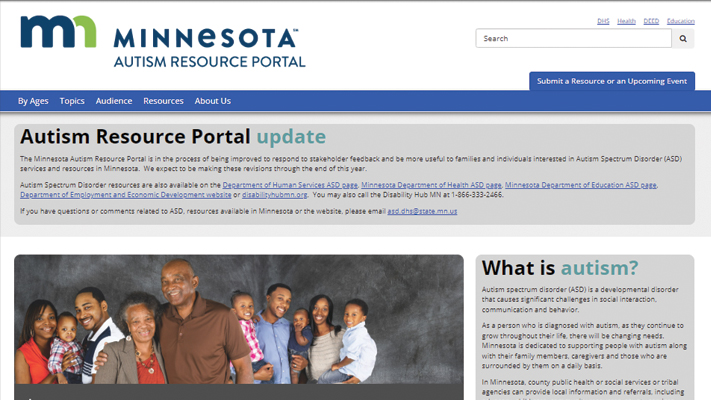
The project resulted in the successful launch of the Minnesota Autism Resource Portal, which now serves over 100,000 Minnesotans with autism. The portal was soft-launched at the 2018 Odyssey Conference, providing a vital resource for users to access information and services.
8. Lessons Learned
A key lesson learned was the importance of ongoing collaboration with stakeholders throughout the design and implementation process. Additionally, ensuring compliance with accessibility standards from the outset was crucial for creating an inclusive resource that effectively serves its intended audience.